
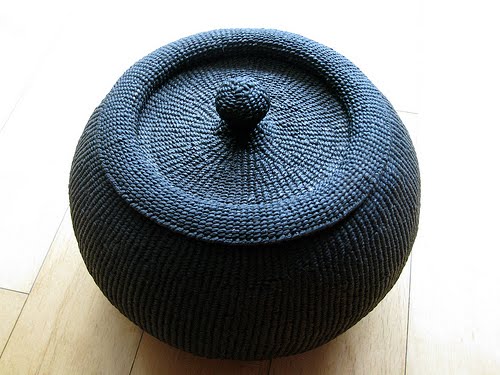
 chamber pot
Master jiseung weaver, Na Seo Hwan, uses hanji, a handmade paper of pulp from the bark of the paper mulberry tree. Because the making of hanji and the weaving process require intense labor, time, and hand strength, there are very few remaining masters in Korea.
 hanji cords - rolled and unrolled
Mr. Na weaves hanji cords to form practical, lightweight pots. Sticky rice glue is applied as a waterproofing agent, and the pots can be coated with layers of lacquer made from the sap of the lacquer tree, the vapors of which can be quite poisonous.
 examples: the white pots are coated with sticky rice paste and the black pot is lacquered
Here's a lovely video made by Aimee Lee that shows Na Seo Hwan in action.
Watching the smooth process had me marveling about the experimenting, trials, and tribulations that surely went into perfecting the creation of such beautifully balanced objects.
Another post about Aimee's Korean Paper Art that you might enjoy.
photos: Aimee Lee


